How To Build A Simple Pre-Launch Kayaking Routine
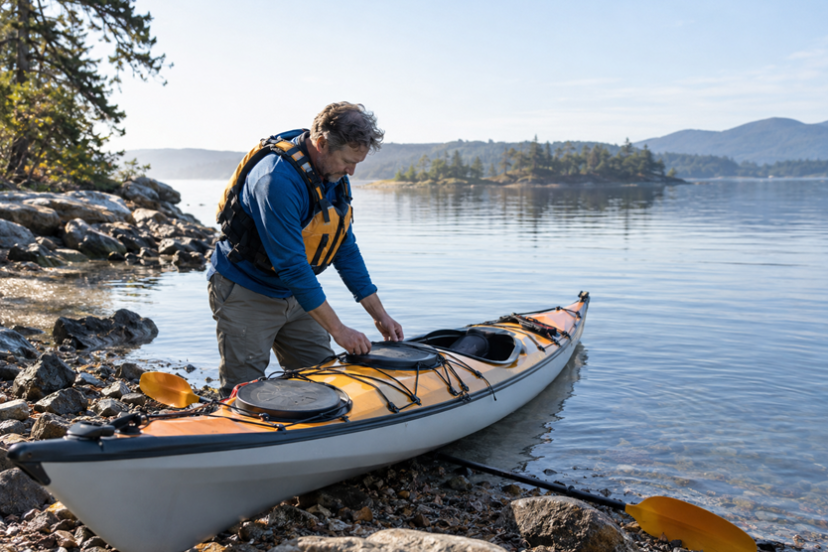
A simple pre-launch kayaking routine is a short, repeatable pause before you push away from shore to confirm that you, your kayak, your essential gear, and the conditions are ready for the trip you are actually about to take.
It does not need to become a complicated inspection ritual. The goal is to catch small problems while they are still easy to fix on land.
A loose hatch cover, forgotten water bottle, poorly adjusted footrest, inaccessible communication device, or changing wind can be an inconvenience at the launch and a much bigger problem once you are on the water.
The best routine is therefore not the longest one. It is the one you can realistically repeat every time you paddle.
Why The Last Few Minutes Before Launch Matter
Pre-launch areas can be deceptively distracting.
You may be unloading the kayak, carrying equipment, talking with other paddlers, watching boat traffic, checking parking restrictions, adjusting clothing, or simply feeling eager to get onto the water.
That transition from land to water creates an easy opportunity to overlook something.
Experienced paddlers are not necessarily immune to this. Familiarity can sometimes make a launch feel so routine that important details receive less attention.
A consistent pre-launch habit provides a deliberate break between preparing to paddle and actually paddling.
Instead of relying on memory in a busy moment, you briefly verify the things most likely to affect the trip.
Start With The Conditions You Actually Have
One of the most useful things you can do before launching is compare the conditions in front of you with the outing you originally planned.
They are not always the same.
Wind may be stronger than expected. Boat traffic may be heavier. Visibility may have changed. Water conditions near the launch may tell you something that was not obvious from a forecast viewed earlier.
For coastal paddling, tidal movement, swell, fog, and changing wind may add considerations that are not present on a small protected lake.
The important principle is simple: your plan should respond to the conditions, rather than expecting the conditions to cooperate with your plan.
Changing the route, shortening the outing, staying closer to shore, choosing a more protected area, or deciding not to launch can all be reasonable paddling decisions.
A successful kayaking trip does not require completing the original plan.
Give The Kayak A Quick Physical Look
Before carrying or sliding the kayak into the water, take a moment to look over the boat as a working system rather than as a collection of equipment.
You are primarily looking for anything obviously different from normal.
Check that hatch covers are seated properly if your kayak uses them. Notice whether deck lines, bungees, handles, rudder controls, or skeg components appear damaged or tangled. Make sure loose equipment will not immediately shift, disappear overboard, or interfere with paddling.
This does not need to become a technical inspection before every recreational outing.
The purpose is simply to identify obvious problems before water makes them harder to address.
Even something as small as discovering that a footrest moved during transportation is easier to correct while standing beside the kayak than after pushing away from shore.
Make Sure Your PFD Is Ready For Paddling
A personal flotation device is useful only when it is properly worn and suitable for the activity.
Before launching, confirm that your paddling PFD is secured comfortably enough that you can move your shoulders and torso while paddling without it riding excessively upward.
This is also a useful moment to notice what you have attached to it.
Frequently used or safety-related items should be positioned so they are accessible without creating unnecessary clutter or interfering with normal movement.
That matters particularly when you carry communication equipment.
For paddlers heading into coastal or other environments where a marine VHF radio is appropriate, the radio generally needs to be somewhere you can reach it rather than buried inside the kayak. If you are deciding what type of radio is appropriate for your paddling, the guide on how to choose a handheld marine radio for coastal kayaking explains the practical features worth considering.
Communication equipment supports preparation and judgment. It does not make poor conditions safe or replace the ability to recognize when an outing exceeds your experience.
Confirm That Essential Gear Is Accessible
A surprisingly common preparation mistake is having the right equipment but storing it where it is difficult to use.
Gear needed only after returning to shore can usually remain packed away.
Gear that may be needed while paddling should receive more thought.
Water, navigation information, communication equipment, sun protection, and other trip-appropriate essentials should be located where their placement makes sense for the outing.
The exact equipment varies considerably depending on the paddling environment.
A short recreational paddle on a protected pond is different from a longer coastal trip. The routine does not need to treat those outings as though they carry identical requirements.
Instead, ask whether the equipment you brought matches the conditions, distance, environment, and realistic problems associated with that particular trip.
Adjust The Kayak Before You Are Floating Away
Basic fit adjustments are another detail worth addressing before launch.
Your seating position, footrests, and any adjustable contact points should allow you to sit comfortably and control the kayak without awkward reaching or excessive tension.
Small adjustments become much more annoying once you are floating.
This is especially noticeable when launching from a busy shoreline where you may need to begin maneuvering almost immediately.
Taking an extra moment on land can make the first several minutes on the water noticeably calmer.
Pause Before The Final Push-Off
The last part of a good pre-launch routine is not really about equipment.
It is about attention.
Before pushing away from shore, pause for a moment and look around.
Notice where you are launching from. Look at the wind on the water. Notice nearby boat traffic or other paddlers. Confirm your intended direction of travel and any obvious landmarks that will help you recognize your return point.
If you are paddling with other people, this is also a natural moment to confirm that everyone is actually ready.
One person still adjusting equipment while another person begins paddling away is an unnecessary way for a group to become separated before the trip has really started.
A calm launch usually begins with everyone deliberately leaving shore rather than simply drifting into the outing.
Avoid Turning The Routine Into A Memory Test
A pre-launch routine is most useful when it follows roughly the same pattern each time.
You might naturally think through your preparation in a sequence such as conditions, kayak, PFD, accessible gear, fit, and final surroundings.
The exact order matters less than consistency.
Trying to remember a different collection of details for every outing creates unnecessary mental work.
Repetition gradually turns preparation into habit.
That is one reason experienced paddlers can sometimes appear unusually calm at the launch. Good preparation does not always look complicated. Often, it simply means familiar tasks are being handled in a familiar order.
More Gear Does Not Automatically Mean Better Preparation
Another misunderstanding is equating preparedness with carrying large amounts of equipment.
Gear can be valuable, and certain environments justify specialized equipment. But preparedness also includes knowing what you brought, knowing where it is, understanding how it works, and recognizing the limitations of both the equipment and yourself.
A paddler with carefully selected equipment and a realistic understanding of the conditions may be better prepared than someone carrying far more gear without a clear plan for using it.
The pre-launch routine should therefore help you confirm readiness, not encourage you to bring equipment simply because it exists.
Do Not Let Routine Override Judgment
Consistency is useful, but conditions still deserve fresh attention.
Completing the same preparation routine you used on your previous trip does not mean today’s outing presents the same situation.
Weather changes. Water changes. Equipment ages. People get tired. Skills vary among paddling partners.
Your routine should create a moment to notice those differences.
If something important does not feel right, investigating it before launch is usually easier than convincing yourself it will probably be fine once you are underway.
There is no prize for launching.
Sometimes good paddling judgment happens before the kayak ever touches the water.
A Good Launch Should Feel Deliberate, Not Rushed
A useful pre-launch kayaking routine can be surprisingly short.
You do not need to turn every outing into a formal inspection. You simply want a repeatable pause that confirms the conditions still make sense, the kayak is ready, essential equipment is accessible, your fit is comfortable, and you understand what is happening around the launch.
That habit removes some of the uncertainty from the first few minutes of a trip.
More importantly, it shifts preparation away from remembering everything perfectly and toward noticing the few things that matter before you leave shore.
The result is not guaranteed safety. Kayaking always requires ongoing awareness and judgment.
But beginning the trip deliberately gives you a much better foundation for making those judgments once you are on the water.