The biggest beginner mistakes in kayak fishing usually come down to trying to fish before learning…
Biggest Safety Mistakes Beginners Make While Kayak Fishing
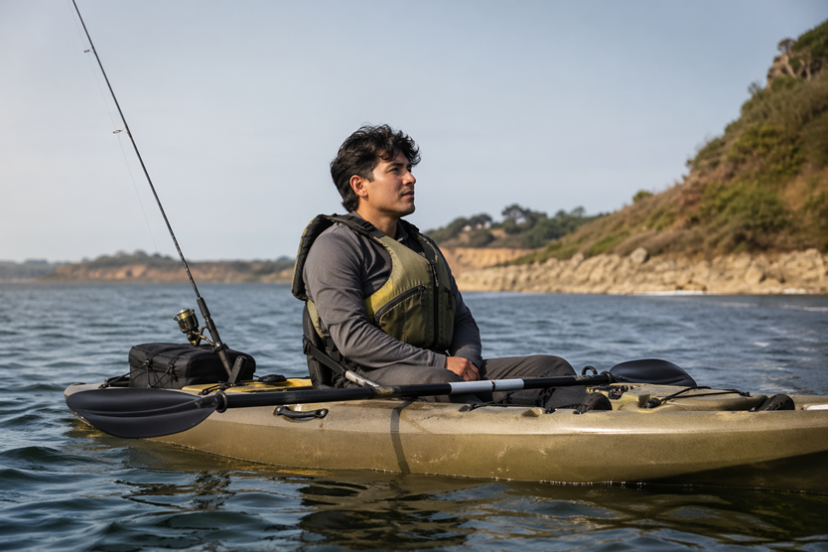
The biggest safety mistakes beginners make while kayak fishing usually come from treating the kayak like a small fishing boat instead of a small, human-powered craft. Most early problems happen when a new paddler underestimates balance, overestimates conditions, carries too much gear, or focuses so much on fishing that they stop paying attention to the water, weather, and their own position.
That is what makes beginner safety mistakes so common. They often do not feel reckless in the moment. They feel small. One more rod. One quick reach. One slightly windy afternoon. One launch that looks manageable from shore. But on a kayak, small decisions stack up quickly.
For many beginners, this situation feels familiar. You are excited to fish, trying to manage tackle, paddle, posture, and boat position all at once, and you are learning that the kayak responds to every movement. Even on calm water, that can create uncertainty. A new paddler may not feel in obvious danger, but may still be making choices that reduce stability, limit reaction time, or make recovery harder if something goes wrong.
The first mistake is starting with fishing instead of boat control
A lot of beginners quietly assume kayak fishing is mostly about adding fishing gear to a simple paddle outing. In practice, it works better the other way around. Safe kayak fishing starts with being comfortable in the kayak first.
When a beginner is still unsure how the boat feels during turns, small shifts in weight, paddle strokes, or stopping near shore, fishing tasks add distraction before basic comfort is there. Reaching for tackle, turning to grab a rod, looking down too long, or drifting into a slightly awkward angle can become much bigger problems when the paddler is not yet settled in the boat.
One of the most helpful reframes is this: early kayak fishing safety is usually more about stability, awareness, and simplicity than catching fish. That does not make the trip less real. It makes it more sustainable.
Too much gear creates more problems than beginners expect
Many beginners feel safer bringing more equipment. In reality, too much gear often makes a kayak less manageable.
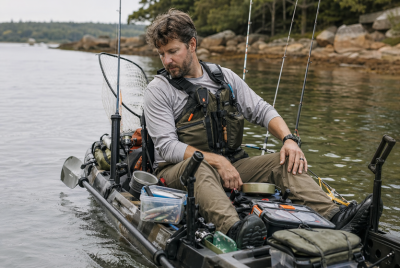
Extra rods, loose tackle, bulky bags, and deck clutter do more than make the boat look crowded. They restrict movement, create snag points, complicate launches, and make it harder to stay organized under pressure. They can also tempt the paddler to twist, reach, and shift awkwardly at exactly the wrong time.
This is one of the most common misunderstandings in kayak fishing. Beginners often think the problem is not owning the right setup yet. More often, the real problem is carrying more than their current skill level can manage comfortably.
A simple setup is not just easier. It is safer. It gives the paddler more room to move, think, and react.
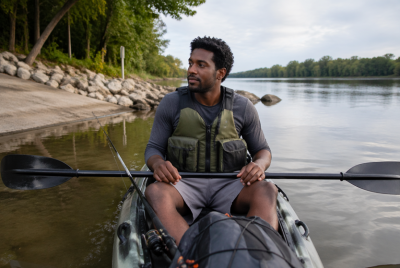
Not wearing a life jacket because the water looks calm
Calm water can create false confidence. A shoreline pond, protected cove, or slow-moving lake can look so manageable that a beginner starts thinking in terms of convenience rather than risk.
But kayak fishing changes the situation. You may lean, reach, twist, drift, or get distracted while handling gear. That means the issue is not only whether the water looks rough. It is whether you can suddenly end up in it.
This is why skipping a properly worn life jacket is such a serious beginner mistake. The risk is not based only on waves or distance from shore. It is based on the fact that kayak anglers often lose balance during ordinary, unremarkable moments.
A useful clarification here is that safety problems rarely announce themselves dramatically first. They often begin with surprise.
Beginners often choose conditions that are slightly beyond them
Many first-time kayak anglers do not launch in obviously extreme conditions. They launch in conditions that are just a little more demanding than they realize.
A bit more wind than expected. A little boat wake. A launch with muddy footing. Water temperature that feels irrelevant because the air is warm. A shoreline that seems close until paddling back becomes tiring. These are the kinds of details that quietly raise the difficulty level.
This matters because beginners are already using mental energy on balance, direction, gear awareness, and fishing decisions. When conditions add even a moderate extra load, the paddler may fall behind the situation without realizing it at first.
This is part of why judgment matters so much in kayak fishing. The goal is not proving you can get out there. The goal is staying within conditions that leave room for mistakes, learning, and calm decision-making.
Reaching and leaning the wrong way is a classic early error
A beginner often gets into trouble not because the kayak is unstable, but because they respond to movement in an unstable way.
When the kayak shifts, many new paddlers stiffen up, lean away from the movement, or reach farther than they should to grab something before it falls. That reaction makes sense emotionally, but it often makes balance worse.
Kayaks move under you. That is normal. The mistake is assuming every little wobble means the boat is about to flip and then reacting with sudden body movements. The more abrupt the reaction, the more likely the paddler is to create the problem they were trying to avoid.
A quiet but important insight for beginners is that not every unstable feeling is actual danger. Sometimes it is just unfamiliarity. Learning that difference helps people stay calmer and make better choices.
Launches and landings cause more trouble than beginners expect
Many people picture safety in terms of what happens once they are out fishing. But some of the most awkward moments happen close to shore.
Getting in, pushing off, returning to a ramp, stepping out onto uneven ground, or trying to manage paddle and rod at the same time can create rushed movements and poor balance. Beginners often relax too early because they are near land, even though the boat may still be shifting under them in shallow water.
That matters because embarrassment and urgency can lead to fast decisions. A new paddler may try to stand too soon, grab unstable footing, or twist toward shore while the kayak is still floating unevenly.
Near-shore moments deserve more respect than they usually get.
Letting fishing attention replace situational awareness
This is one of the most kayak-fishing-specific mistakes beginners make. Once they start thinking about lure changes, casting angles, fish activity, and rod handling, their attention narrows. They stop noticing how fast they are drifting, how the wind is changing, how far they have moved from an easy landing area, or how tired they are getting.
Fishing naturally pulls focus. That is part of why people enjoy it. But in a kayak, your fishing attention cannot fully replace your water awareness.
A paddler who keeps checking position, weather feel, boat angle, and distance from shore usually stays ahead of problems better than the paddler who is technically more excited or more gear-equipped.
Safety in kayak fishing is not just about avoiding emergencies. It is about noticing subtle changes before they become problems.
Beginners sometimes mistake confidence for readiness
It is easy to assume that feeling excited, motivated, or generally outdoorsy means you are ready for a fishing kayak in a wide range of conditions. But confidence and readiness are not always the same thing.
Readiness is quieter. It usually looks like choosing easy water, keeping the trip simple, wearing the right safety gear, knowing when to stop, and being honest about what still feels unfamiliar.
That can feel less impressive than loading up for a “real” fishing session, but it is usually the smarter path. Most good kayak anglers build confidence by staying well inside their limits for a while, not by testing them early.
This is worth normalizing because many beginners are not careless. They are just trying to do too much too soon.
The pattern underneath most beginner safety mistakes
When you step back, most beginner mistakes in kayak fishing connect to one larger pattern: too much complexity too early.
Too much gear. Too much movement. Too much confidence in calm-looking conditions. Too much focus on fishing before basic kayak comfort is solid. Too much assumption that everyday water will stay easy.
That pattern matters because it helps explain why safety advice can feel scattered unless the paddler sees the common thread. The issue is rarely one dramatic error. It is usually a setup that leaves too little margin.
More margin is what helps beginners most. More stability. More simplicity. More awareness. More honesty about conditions. More respect for how different kayak fishing feels from shore fishing or boat fishing.
What beginners should take away from this
The safest beginner kayak anglers are usually not the ones with the most gear or the most ambitious first outings. They are the ones who keep things simple long enough to understand how the kayak, the water, and their own attention work together.
That is the real shift. Kayak fishing is not just fishing from a different seat. It is fishing inside a small, responsive craft where judgment matters as much as enthusiasm. Once beginners understand that, a lot of confusing safety advice starts making more sense.
You do not need to know everything before you begin. But you do need to respect how quickly little choices affect balance, awareness, and control. That calmer, simpler mindset is what helps beginners become safer and more confident over time.

More to Explore