The biggest beginner mistakes in kayak fishing usually come down to trying to fish before learning…
Biggest Stability Mistakes Beginners Make While Kayak Fishing
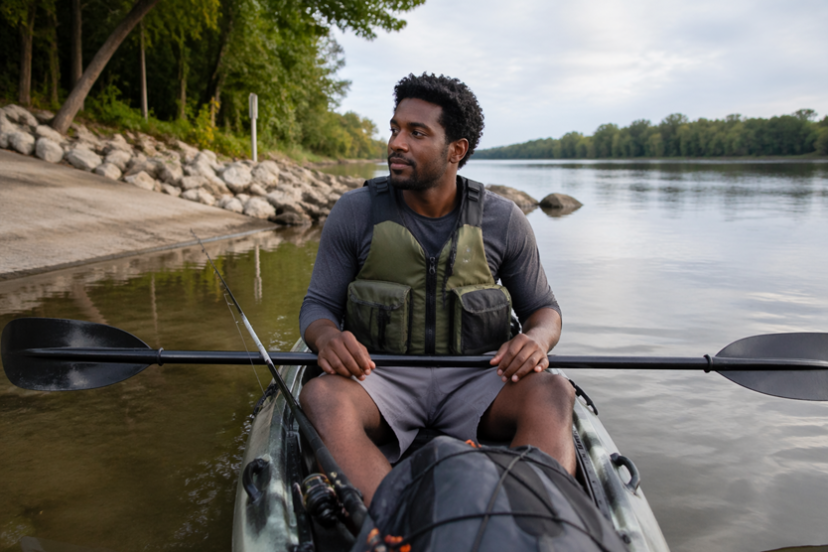
One of the biggest stability mistakes beginners make while kayak fishing is treating the kayak like a small boat instead of a craft that responds directly to body position, movement, and weight placement. Most early stability problems do not come from one dramatic mistake. They come from small habits that make the kayak feel less predictable than it really is.
This usually shows up as feeling wobbly while reaching for gear, turning too quickly to one side, shifting weight without noticing it, or getting tense every time the kayak rocks a little. Many beginners assume that instability means the kayak is unsafe or that they simply need a wider kayak. In reality, the problem is often less about the hull and more about how the paddler is moving in it.
That matters because confidence on the water is closely tied to stability. When a beginner feels unstable, they often stop focusing on fishing, stop making calm decisions, and start reacting to every little movement. That can lead to poor positioning, rushed choices, and unnecessary risk, especially near shorelines, docks, current, wind, or while handling rods and tackle.
Stability usually feels worse before it feels better
A common beginner experience in kayak fishing is mistaking normal movement for danger. A fishing kayak is not supposed to feel completely motionless. It moves with the water, responds to your posture, and reacts when you shift your body.
That sensation can be unsettling at first, especially for someone coming from a dock, jon boat, bass boat, or shoreline fishing background. The first few trips often create the impression that every wobble means a capsize is about to happen. In most cases, that is not true. A certain amount of movement is normal, and learning that difference is part of becoming more comfortable on the water.
The important distinction is this: movement is not the same thing as loss of control. Beginners often become less stable when they panic at normal kayak motion and make sudden corrections that are bigger than the situation requires.
Reaching too far is one of the fastest ways to feel unstable
Many new kayak anglers lose stability because they keep gear just outside easy reach and then lean for it without thinking. A tackle box behind the seat, a rod placed awkwardly off to one side, or a loose tool near the edge of the deck can all invite movements that pull the paddler out of a centered position.
The issue is not just the lean itself. It is the combination of twisting, reaching, and shifting weight all at once. That multiplies the kayak’s response and makes the moment feel much less controlled.
This is one reason organized deck layout matters so much more than beginners often expect. Stability is not only about the kayak underneath you. It is also about whether your setup encourages calm, compact movements or awkward, extended ones.
Sudden upper-body movement creates more problems than beginners realize
Another common mistake is moving the shoulders and torso too aggressively while the lower body is not staying balanced and connected. Beginners often react to a fish, snag, paddle adjustment, or slipping item with a quick reach or sharp turn.
That matters because the upper body has a strong effect on balance. A sudden sideways motion can shift your center of mass faster than the kayak can settle underneath you. Even if the kayak could have handled a slower movement just fine, the rushed version makes it feel unstable.
A helpful reframe is to think of kayak fishing movement as deliberate rather than fast. Calm transitions usually feel more stable than strong corrections. Inexperience often creates extra motion, not better control.
Sitting stiffly can make the kayak feel less stable
Many beginners assume that staying rigid will help them stay upright. In practice, excessive stiffness often works against them.
When paddlers lock their posture, brace with tension, or freeze every time the kayak moves, they stop allowing the kayak to respond naturally beneath them. This creates a disconnected feeling, as if the kayak is moving unpredictably instead of moving with them.
A more grounded mindset is to let the kayak move a little while staying centered and composed. Good stability is not about eliminating all motion. It is about staying relaxed enough to respond well to normal motion.
This is one reason experienced paddlers sometimes look calmer in the same conditions that make beginners nervous. They are not forcing stillness. They are allowing small, normal movements without overreacting to them.
Standing too early is often a confidence mistake, not just a technique mistake
For beginners in stand-capable fishing kayaks, one of the most common errors is assuming that because a kayak is marketed as stable enough to stand in, standing should feel easy right away.
That assumption creates problems. Stability while standing is not just about hull width. It also depends on water conditions, body control, familiarity with the kayak, and whether the paddler has learned how the kayak reacts to shifting weight.
Many beginners try standing before they have a feel for seated balance, how their feet connect to the deck, or how subtle body movements affect the hull. When that happens, the kayak may feel unstable not because it is poorly designed, but because the paddler has skipped the part where familiarity turns into control.
There is no loss in staying seated longer while learning. In fact, it often leads to better judgment and safer progress.
Gear clutter can quietly create instability
Beginners sometimes focus so much on bringing enough fishing gear that they overlook how clutter changes movement. Extra rods, tackle trays, bags, tools, crates, and accessories can crowd the cockpit and deck area, making simple actions more awkward.
This matters in two ways. First, clutter makes it harder to move smoothly. Second, it creates more moments where a paddler has to reach around obstacles, twist unexpectedly, or recover from a snagged item.
A heavily loaded kayak can also change how the boat sits in the water and how it responds. More gear does not always mean better preparedness. Sometimes it means fewer clean movements and less confidence.
For beginners, simpler setups often support better stability because they reduce distractions and make body positioning easier to manage.
Beginners often confuse primary stability with real-world stability
A kayak that feels very steady at first contact can still feel awkward later if the paddler has not learned how it behaves once it starts to edge or move. Many people judge stability only by the first impression they get when sitting flat on calm water.
But real-world stability includes what happens when you turn, reach, adjust your body, handle gear, or deal with light chop, boat wake, or breeze. Beginners sometimes choose or judge kayaks based only on that first flat-water feeling, then feel confused when the boat seems less predictable during actual fishing movements.
This misunderstanding can make people think something is wrong with the kayak when what they are really noticing is the difference between static comfort and dynamic control. That is an important clarification, because it helps beginners realize that stability is partly something you learn to work with, not just something you buy.
Trying to fish before learning the kayak makes everything harder
A subtle but very common mistake is trying to do too many things at once on early trips. Beginners often launch with full fishing intentions before they are comfortable with basic kayak movement, body positioning, turning, and on-water composure.
That creates overload. Instead of learning how the kayak feels, they are also managing lures, rods, tackle decisions, casting angles, line control, and maybe fish handling. The result is that stability never gets its own attention.
This is one reason early kayak fishing outings can feel more chaotic than expected. The person is not failing at fishing or paddling. They are trying to learn both simultaneously before the foundation feels natural.
A calmer approach is to understand that stability confidence usually develops faster when the kayak itself becomes familiar first.
The biggest mistake is treating every wobble like a warning sign
Many beginners improve once they realize that not every shift, rock, or tilt means they are close to flipping. That belief causes more trouble than the motion itself.
When paddlers interpret normal kayak feedback as danger, they tense up, rush, grab, lean incorrectly, or stop making controlled movements. That turns manageable instability into a bigger problem.
The real skill is learning what normal feels like. That does not mean being careless. It means becoming better at recognizing the difference between ordinary kayak motion and a genuinely poor position or unsafe decision.
That awareness builds confidence in a much healthier way than trying to force fear out of the experience. Confidence grows when the paddler understands what the kayak is telling them, not when they pretend the movement is not there.
A steadier kayak fishing experience usually starts with calmer habits
For most beginners, stability improves less from chasing perfection and more from removing the habits that create unnecessary imbalance. Reaching too far, loading too much gear, moving too suddenly, staying overly stiff, and trying to do too much too soon can all make kayak fishing feel shakier than it needs to feel.
The encouraging part is that these are learnable patterns. Many stability problems are not signs that someone is bad at kayak fishing. They are signs that the person is still learning how the kayak responds and how to move with it instead of against it.
With a little awareness, beginners often become more stable not because the water changes or the kayak changes, but because their movements, expectations, and decisions become more grounded. That shift is what usually turns the experience from tense and uncertain into calm and manageable.

More to Explore