Stepping into the world of kayaking is exciting, but it can also feel a little overwhelming—especially…
12 Core Exercises That Improve Your Stroke Power While Kayaking
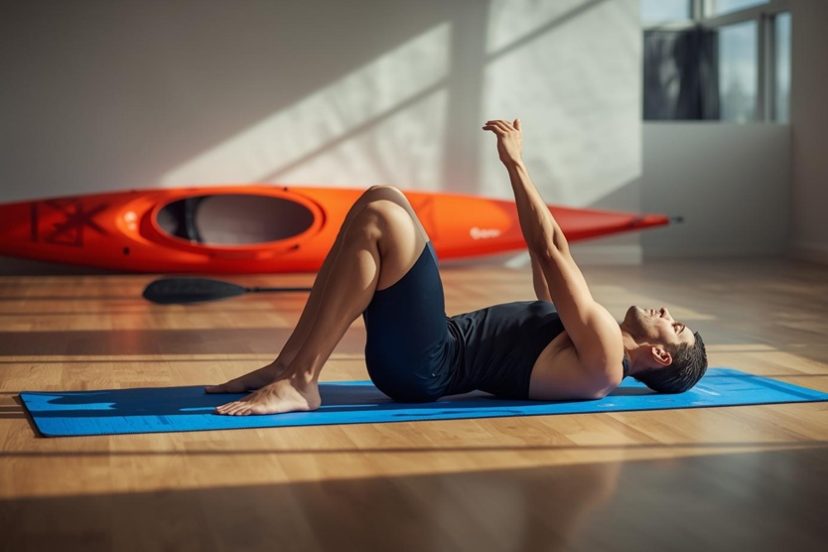
For kayakers, stroke power doesn’t come from strong arms alone—it starts at the center of your body.
Your core is the engine that drives every paddle through the water, transferring energy from your legs and torso to your paddle.
Without a strong, engaged core, even the most seasoned kayakers can find themselves fatiguing early or struggling to maintain speed and control.
That’s why focusing on core strength exercises for kayakers isn’t optional—it’s essential for performance, endurance, and stability on the water.
Whether you’re paddling through calm lakes or carving through river rapids, your core dictates efficiency.
Each rotation, brace, and push off your footrests relies on abdominal, oblique, and lower-back engagement.
By incorporating targeted exercises into your routine, you’ll not only increase stroke power but also reduce the risk of injury and improve overall control of your kayak.
Let’s explore twelve of the most effective core exercises designed specifically for kayakers, along with practical tips for execution, modifications, and how each one translates directly to your paddling performance.
1)) Russian Twists
Why it matters: Kayaking is all about rotation. Each paddle stroke depends on your ability to twist your torso efficiently, transferring power from your core to your paddle.
How to do it:
- Sit on the floor with your knees bent and feet slightly lifted.
- Hold a medicine ball, dumbbell, or water bottle in front of your chest.
- Twist your torso to the right, then to the left, controlling the motion.
- Keep your back straight and engage your abs.
Tip for kayakers: Focus on controlled, deliberate rotations. Imagine your paddle slicing through the water with each twist, maximizing torque from your obliques.
2)) Plank with Shoulder Taps
Why it matters: Stability is crucial when waves rock your kayak. A strong core prevents your upper body from wobbling, allowing for smooth, powerful strokes.
How to do it:
- Get into a forearm plank position, keeping your body in a straight line.
- Lift one hand to tap the opposite shoulder, then return.
- Alternate sides, maintaining plank form and avoiding hip rotation.
Tip for kayakers: Think of this as bracing against choppy water. Each tap simulates the subtle adjustments you make while stabilizing your kayak mid-stroke.
3)) Seated Medicine Ball Rotations
Why it matters: Adds resistance to rotational motion, directly mimicking paddle strokes.
How to do it:
- Sit on the floor with legs bent, feet grounded.
- Hold a medicine ball or weight with both hands.
- Rotate your torso slowly from side to side, keeping your arms extended.
- Focus on engaging obliques and lower back muscles.
Pro-level tweak: Perform the exercise on a balance disc or BOSU ball to challenge stabilization—similar to balancing in a kayak.
4)) Bird-Dog
Why it matters: Encourages spinal stability while engaging core and lower-back muscles, improving posture and stroke efficiency.
How to do it:
- Begin on hands and knees, aligning wrists under shoulders and knees under hips.
- Extend your right arm forward and left leg back simultaneously.
- Hold for a few seconds, then switch sides.
- Keep your torso stable and avoid sagging hips.
Kayaking connection: Helps maintain upper-body stability during long paddling sessions, letting you transfer power without losing balance.
5)) Side Plank with Hip Dips
Why it matters: Strengthens obliques and lateral stabilizers—key for paddling when your kayak tilts or when maneuvering turns.
How to do it:
- Lie on one side with legs stacked, propped on your elbow.
- Lift your hips into a side plank position.
- Lower hips slightly, then lift back up.
- Repeat for desired reps, then switch sides.
Tip: Visualize pushing against water resistance while rotating through a stroke—this lateral stability translates directly to the kayak.
6)) Dead Bug
Why it matters: Trains anti-extension control, keeping your lower back protected while enhancing core endurance for sustained paddling.
How to do it:
- Lie on your back with arms extended toward the ceiling and knees bent at 90 degrees.
- Slowly lower one arm and the opposite leg toward the floor.
- Return to start, alternating sides, keeping your lower back pressed to the floor.
Why kayakers love it: It builds endurance for long paddling sessions without overloading your lower back.
7)) Cable or Band Woodchoppers
Why it matters: Perfect for rotational strength under resistance, simulating the full paddle stroke with power.
How to do it:
- Attach a resistance band or cable at a high or low anchor point.
- Hold the handle with both hands, pulling diagonally across your body.
- Rotate your torso fully while keeping your feet grounded.
- Switch sides after reps.
Pro tip: Keep movements fluid, as if you’re slashing through water, maximizing transfer of rotational power.
8)) Leg Raises
Why it matters: Strengthens lower abs and hip flexors, which contribute to torso rotation and leg drive during strokes.
How to do it:
- Lie flat on your back with legs extended.
- Lift both legs toward the ceiling while keeping your core tight.
- Lower legs slowly without arching your back.
- Repeat for reps.
Kayaking insight: Strong lower abs stabilize the pelvis and allow leg drive to flow into your strokes more effectively.
9)) Stability Ball Rollouts
Why it matters: Engages the full anterior chain, improving anti-extension strength and spinal alignment for long paddling sessions.
How to do it:
- Kneel with hands on a stability ball.
- Slowly roll the ball forward, extending your body while keeping your core engaged.
- Roll back to the starting position.
- Avoid sagging hips or an arched lower back.
Tip: Rollouts mimic forward reach during paddle strokes, reinforcing stability under dynamic conditions.
10)) Mountain Climbers
Why it matters: Adds dynamic endurance, combining core engagement with a cardio element to mimic rapid stroke sequences.
How to do it:
- Start in a high plank position.
- Drive knees toward chest alternately at a controlled pace.
- Maintain a tight core and flat back.
Kayaking connection: Builds core endurance for high-intensity paddling sprints while maintaining posture.
11)) Hollow Body Hold
Why it matters: Essential for creating a strong, rigid core that acts as the central engine during each paddle stroke.
How to do it:
- Lie on your back, lift your shoulders and legs slightly off the floor.
- Keep your lower back pressed into the ground, arms extended overhead or by your sides.
- Hold for 20–60 seconds, focusing on breathing and engagement.
Translation to water: Think of your core as the keel of your kayak—rigid, strong, and transferring power efficiently from end to end.
12)) Rotational Medicine Ball Throws
Why it matters: Explosive rotational power drills replicate dynamic paddle strokes and improve on-water stroke speed.
How to do it:
- Stand sideways to a wall or partner.
- Hold a medicine ball, rotate your torso, and explosively throw it forward.
- Catch it on the rebound and repeat.
- Switch sides after reps.
Pro tip: Focus on smooth follow-through, mimicking the finish of a paddle stroke as your body twists.
Integrating Core Exercises Into Your Kayaking Routine
Core strength exercises for kayakers aren’t just about doing crunches—they need to be functional, rotational, and endurance-focused. Here’s a sample approach:
- Frequency: 2–3 core sessions per week.
- Sets and reps: 2–4 sets of 10–20 reps for each exercise; hold planks and hollow holds for 20–60 seconds.
- Progression: Increase resistance with bands, weights, or balance tools as your strength improves.
- Warm-up: Always start with dynamic stretches, torso rotations, and light cardio to prep muscles.
Pairing these exercises with on-water practice will accelerate gains in stroke power, endurance, and kayak control. Over time, you’ll notice smoother strokes, less fatigue, and a stronger connection from your core through to your paddle.
Pro-Tip: Invest in Your Core, Invest in Your Kayaking
Building a strong core is the foundation of powerful, efficient strokes—but why stop there?
Investing in home gym ab equipment allows you to train consistently and safely, targeting not just your abs but your obliques, lower back, and stabilizing muscles.
When combined with full-body strength training, you’ll improve posture, endurance, and overall power—making you a stronger, more resilient kayaker.
Stronger legs, back, and shoulders mean every paddle stroke is more effective, your kayak feels more stable, and long trips become less tiring.
Don’t wait to take your paddling performance to the next level—equip your home gym and start training smarter today.
Conclusion
Maximizing stroke power is about more than arm strength—it’s about creating a powerful, stable, and efficient core.
By committing to these twelve core strength exercises for kayakers, you’ll improve rotation, transfer more energy into each stroke, and stay stable in choppy waters.
The strongest kayakers aren’t always the fastest—they’re the ones who can harness their core to paddle efficiently, powerfully, and sustainably.
Engage your core, rotate with intention, and embrace the challenge. The water rewards those who train smart, and your kayak will respond with every stroke.

More to Explore